CJP (Cockroach Janta Party) Jantar Mantar Protest, This article was created for IMDPP.COM, where we deliver major national and global events in a simple, clear, and copyright-free way. Our goal is to explain every news story or movement, not just its headlines, but its underlying causes and impact.
Beginning: What is CJP all about?
Recently, a new name has gained widespread attention at Delhi’s Jantar Mantar—CJP (Cockroach Janta Party).
This isn’t an old or traditional political party, but rather a Gen-Z youth-driven movement that began on social media and reached the streets.
👉 Initially, people considered it a joke or meme movement.
👉 But gradually, it became a serious form of protest.
This movement brought together students, unemployed youth, and social media users.
What actually happened at the Jantar Mantar Protest?
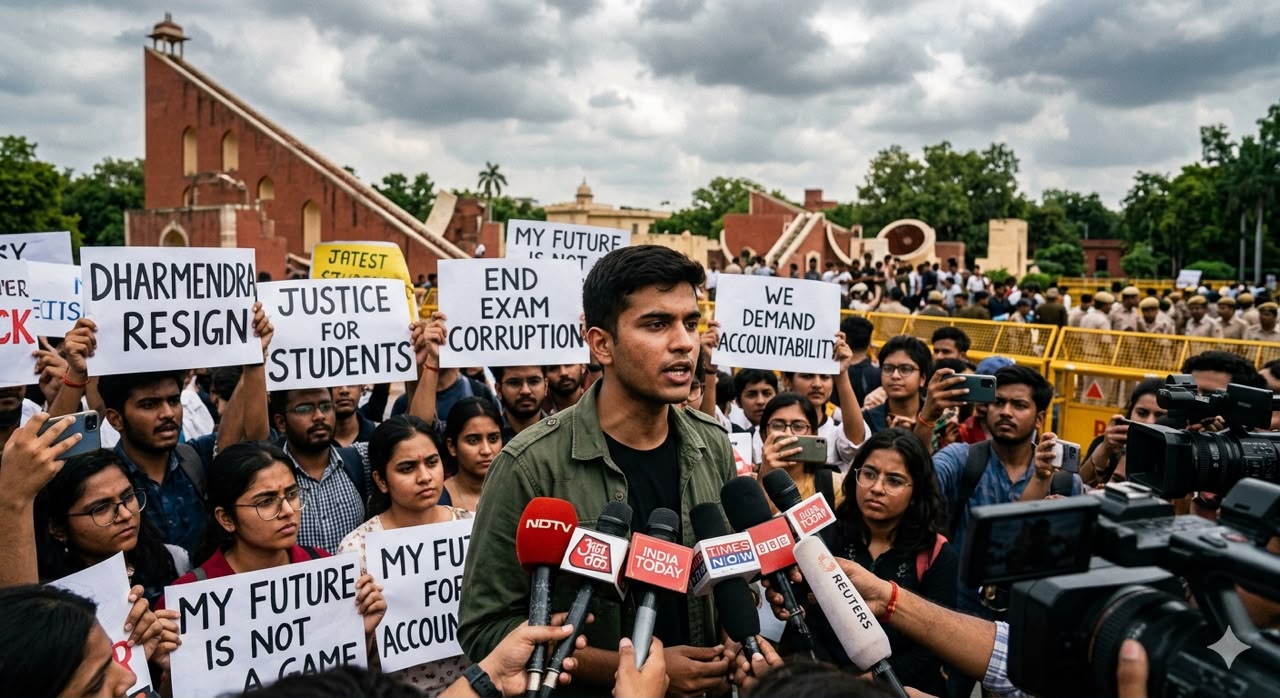
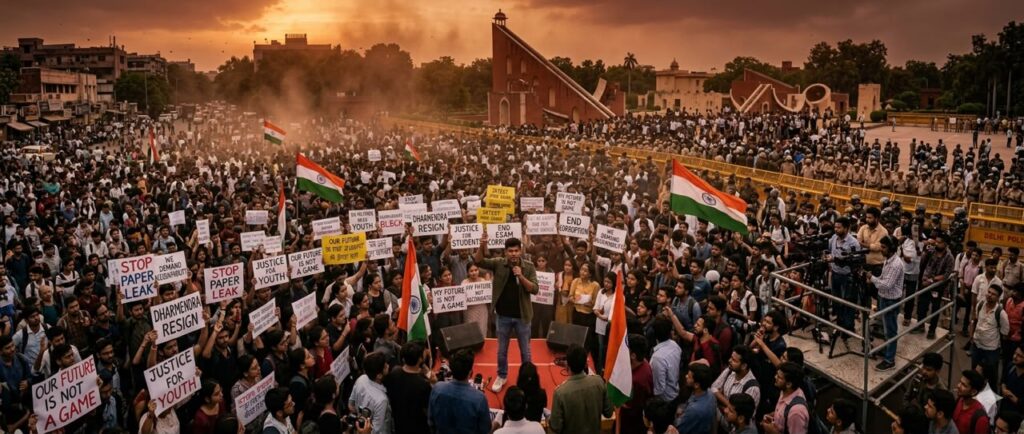
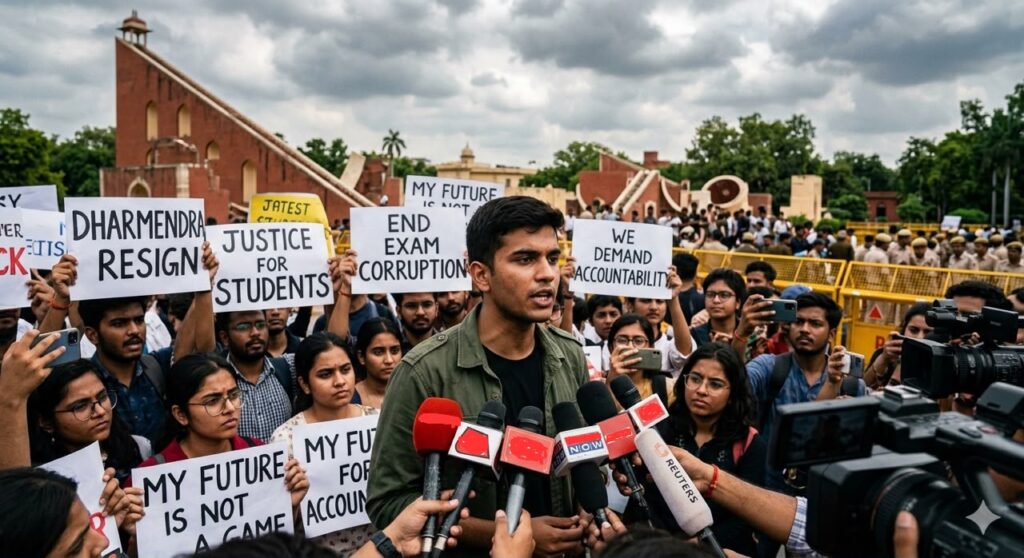
Delhi’s Jantar Mantar has always been a place of protest. Thousands of students and youth associated with the CJP gathered here.
Key Scenes:
- Large gathering of students
- Hands holding posters and slogans
- Slogans like “system change” and “justice for education”
- Calm but emotional atmosphere
- Police surveillance and barricading
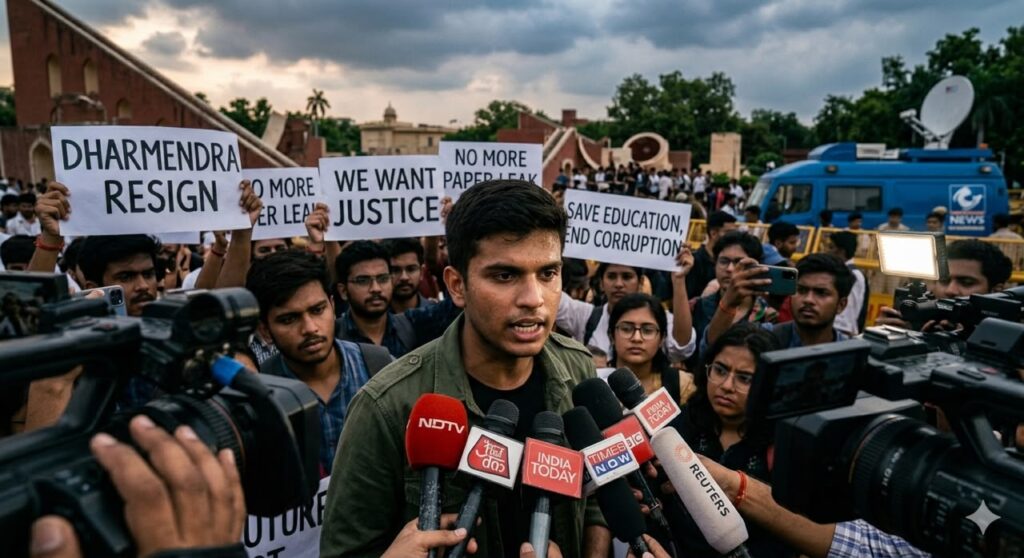
This protest also went viral digitally—videos of it spread rapidly on Instagram, Twitter, and YouTube Shorts.
What were the main reasons for the movement?
The CJP movement wasn’t focused on just one issue, but rather a mix of several major student issues:
1. Dissatisfaction with the education system
Students believed that:
- Education is becoming more expensive
- Coaching dependency has increased
- Exam pressure is too much
2. Issues of exam transparency
- Incidents of paper leaks
- Result delays
- Allegations of unfair selection processes
3. Unemployment
- Millions of educated youth are jobless
- Low salaries in the private sector
- Limited vacancies for government jobs
4. Social media influence
- Reels and videos made this movement viral
- Youth adopted “system change” as their slogan
Who were involved in the protest?
This movement wasn’t limited to any one organization.
👥 Main Part:
- Competitive exam aspirants (NEET, SSC, CUET students)
- College students
- Online youth activists
- Social media creators
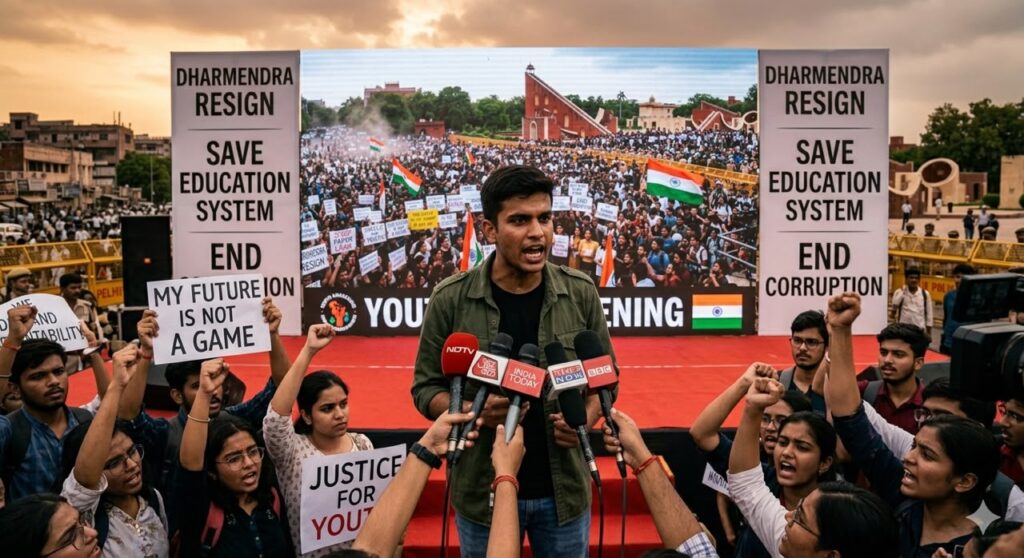
👉 The key point was that it didn’t have a “leader-centric” structure.
👉 It was a crowd-powered movement.
Who is running the CJP? (Leadership Structure)
The CJP doesn’t have a traditional political structure, but a few names stand out:
👤 Abhijeet Dipke (Reported Founder)
- His name is mentioned in starting or popularizing this movement.
- Active role in social media strategy and youth engagement.
Core idea:
- No central leader
- Decentralized youth network
- Online + offline coordination
👉 This is why it is being called a “Gen-Z movement”
What were the demands of the Jantar Mantar protest?
The main demands of CJP supporters were:
1. Education reforms
- Transparency in the exam system
- Strict action on paper leaks
2. Employment opportunities
- More government vacancies
- Skill-based hiring system
3. Accountability
- Fixing accountability in the education system
- Control of corruption
Was anyone’s resignation demanded?
During this protest, there was also discussion on social media that some people were asked to resign, but this was not a fully verified official demand.
👉 The main focus was actually on “system reform.”
👉 Talk of resignations was more of a political interpretation and part of viral content.
What could be the impact of this movement?
Now the most important part—what will be its impact?
🏛️ 1. Government pressure could increase.
If youth protests continue to escalate:
- An education policy review could occur.
- Reforms to the exam system could occur.
2. Social media activism will strengthen.
- Future protests and digital movements will increase.
- The role of hashtags and reels will become more powerful.
- Changes in student policies
- Exam security may become stricter
- Digital monitoring may increase
4. Increased political attention
- Political parties will not be able to ignore this youth sentiment
What could the future hold for CJP?
This is the most interesting question.
Scenario 1: Become a Political Party
If this movement continues to be strong:
- CJP could become a registered political party
- A youth-focused manifesto could be issued
- Education and employment would be the central agenda
👉 But this would require strong leadership and structure
Scenario 2: Remain a Pressure Movement
- It could become a protest/activism movement
- It would continue to put pressure on policies
- But it would not become a political party
Scenario 3: Split or fade out
- As social media hype wanes
- As internal coordination weakens
The movement could gradually fade away
What are the chances of becoming a political party?
👉 As of now:
- Probability: Medium (50/50 type)
Because:
✔️ Youth support is strong
✔️ Social media reach is large
❌ But the formal leadership structure is still weak
❌ A clear ideology is not yet fully defined
What is the true meaning of this movement?
The CJP protest is not just a protest, but a signal:
👉 India’s youth are no longer silent
👉 They want change in the education and employment system
👉 And they are raising their voices through digital tools
⸻
Conclusion
The CJP movement is a new type of youth-driven protest that has moved beyond traditional protest spaces like Jantar Mantar to social media and digital activism.
Its biggest message is that:
Youth are no longer just asking questions
But demanding systemic change
Whether this movement takes political shape or remains merely a protest will depend on its leadership, consistency, and public support.