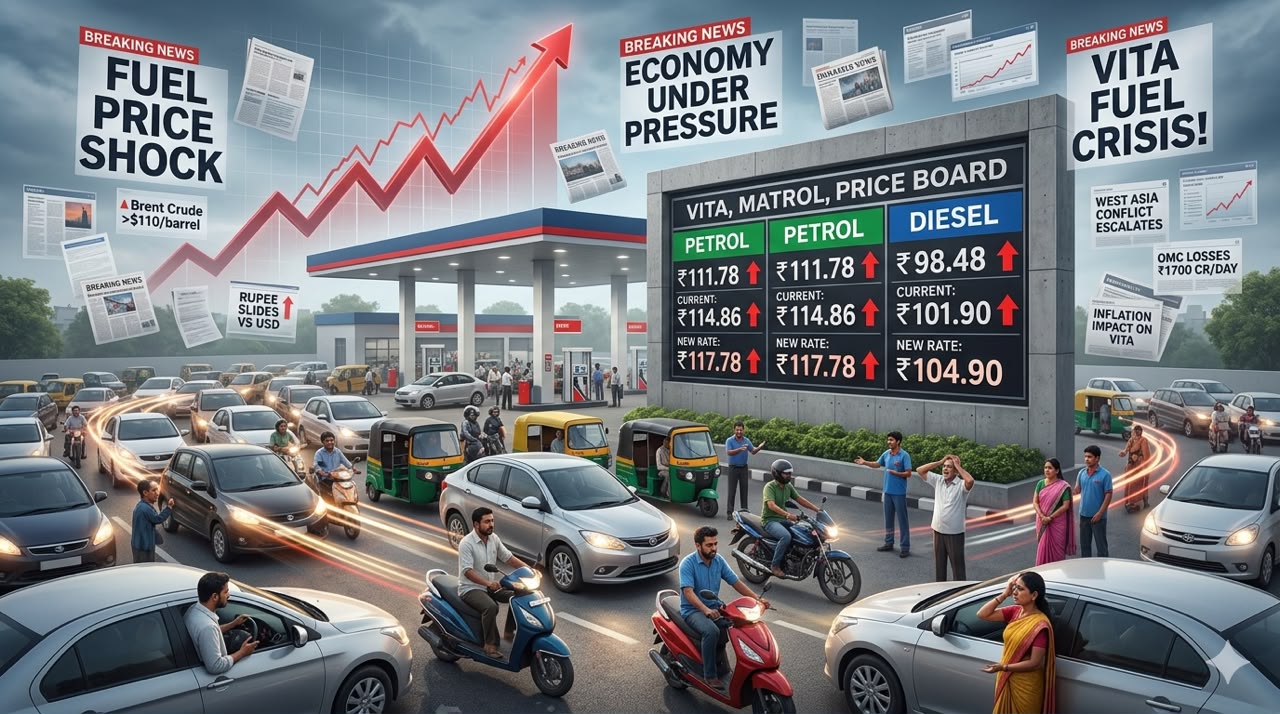
Inflation and rising prices, is a term that everyone experiences in their daily lives. Whether it’s a working person in the city, a farmer in the village, a small shopkeeper, or a student, rising prices affect almost everyone. When food, petrol, diesel, gas cylinders, electricity, clothing, house rent, and other essential items become more expensive, it becomes difficult for people to manage their expenses.
What is inflation?
Simply put, when the prices of goods and services in a country continuously rise, it is called inflation.
For example, if tomatoes that were available for ₹40 per kg last year are now selling for ₹80 per kg, or goods that were available for ₹100 are now available for ₹120, it means that inflation is increasing.
As inflation increases, the purchasing power of money decreases. This means that you may have to spend more money to buy the same amount of goods that you could previously buy for ₹1000.
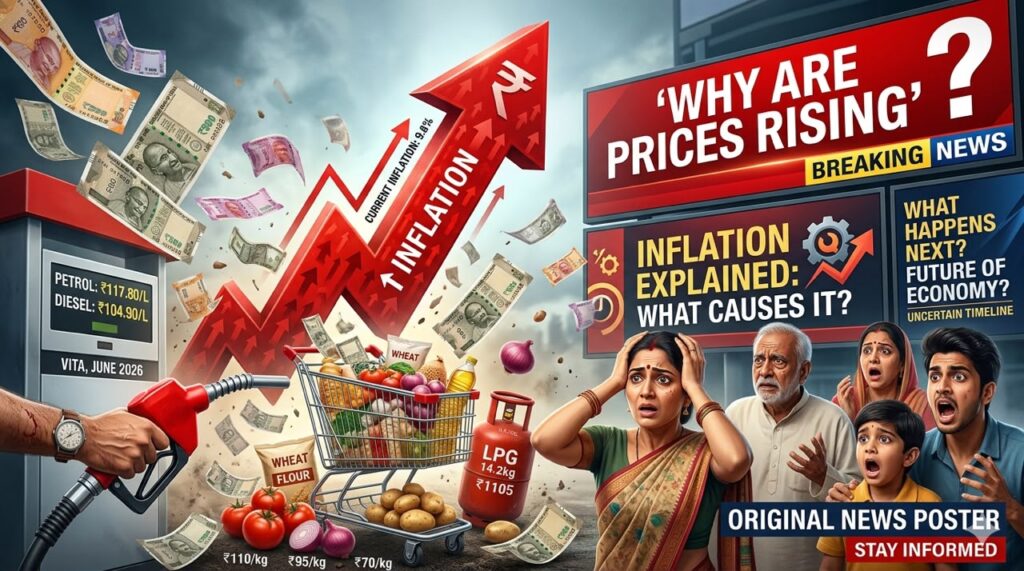
Why does inflation rise?
There can be many reasons behind rising inflation. Often, more than one factor combines to drive up prices.
- High Demand and Low Supply
When demand for a commodity increases but its availability is low, prices begin to rise.
For example, if rainfall is poor one year and the vegetable crop fails, there may be a shortage of vegetables in the market. In such a situation, traders may charge higher prices.
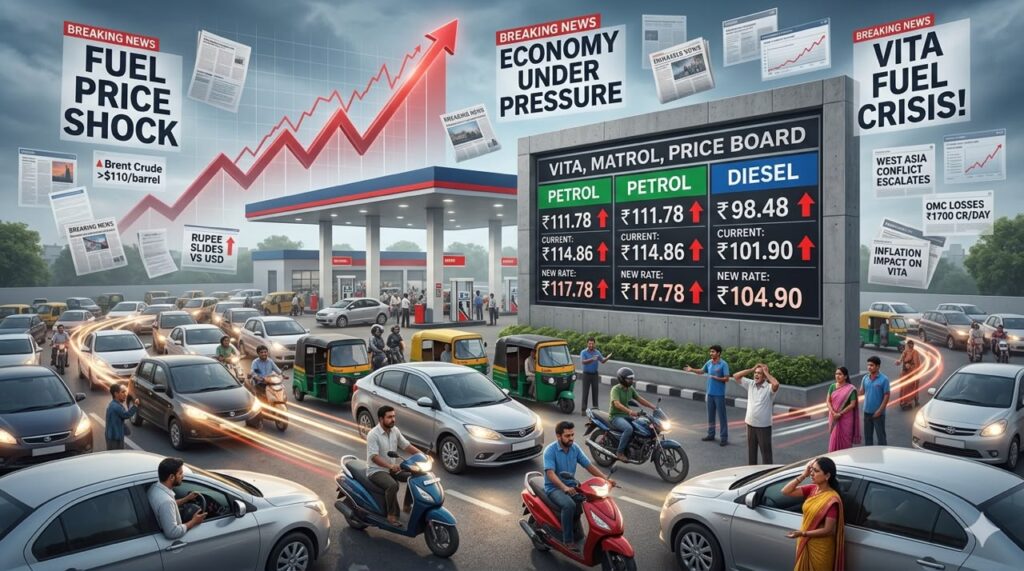
Rising Petrol and Diesel Prices
Petrol and diesel affect almost every sector.
- Truck fares increase
- Freight costs increase
- Farming costs increase
- Factory production becomes more expensive
All these factors increase the final price of goods.
Natural Disasters
Natural events such as floods, droughts, cyclones, and earthquakes can affect production and supply.
If a state experiences heavy flooding, crops can be destroyed. This can lead to a shortage of goods in the market and a rise in prices.
International Situations
Today, countries around the world trade with each other.
If there is war or tension in a major oil-producing region, oil prices can rise. This also affects importing countries like India.
Rising Production Costs
When raw materials, electricity, labor, and transportation costs increase, companies increase the prices of their products.

Impact of Inflation on the Common Man
Inflation has the greatest impact on the common man.
Disruption of Household Budgets
When everyday items become more expensive, families are forced to reduce their expenses.
Many families:
- Reduce travel
- Postpone buying new things
- Reduce savings
Impact on Savings
If a person’s income is ₹30,000 per month and expenses are constantly rising, their savings will decrease.
Low savings mean less money will be saved for the future.
The Middle Class Is Most Impacted
The rich have surplus resources, while the poor may receive some relief from government schemes.
But the middle class often feels the most pressure because their income is limited and expenses constantly rise.
The Impact of Inflation on Farmers
Many people think that rising inflation benefits farmers because crop prices increase.
But the reality is not so simple.
Farmers’ expenses also increase:
- Seeds become more expensive
- Fertilizers become more expensive
- Diesel becomes more expensive
- Wages increase
If production costs rise rapidly, farmers may not realize the expected profits.
Impact on Students
Inflation also affects students.
Rising Expenses
- Books
- Coaching Fees
- Hostel Fees
- Transportation Expenses
- Internet and Technology Equipment
As the prices of these rise, the cost of education increases.
Impact on Small Businesses
Small shopkeepers and traders also face increased challenges.
If they raise prices, they may lose customers.
If they don’t raise prices, profits may decline.
In this situation, running a business becomes difficult.
What is food inflation?
When food prices rise, it is called food inflation.
Food inflation is of particular importance in India because a large portion of the country’s population spends a significant portion of their income on food.
Rising food inflation affects the poor and lower-income groups the most.
Gas Cylinders and Kitchen Expenses
Keeping gas is a necessity in almost every household.
When gas cylinders become expensive:
- Monthly budgets are affected
- Expenses for small businesses increase
- Costs for hotels and restaurants increase
Ultimately, this impact reaches consumers.
Rising Housing and Rent Prices
Rent has become a major expense for people living in large cities.
In many cities:
- Housing rents are rising
- Electricity bills are rising
- Maintenance fees are rising
This puts additional financial pressure on families.
The Relationship Between Inflation and Unemployment
If inflation rises but people’s incomes don’t, economic problems can worsen.
Due to rising costs, many companies may:
- Halt new hiring
- Reduce spending
- Postpone expansion plans
This can impact employment opportunities.
How does the government control inflation?
Controlling inflation is a key responsibility of any government and central bank.
Key Measures
- Increasing the availability of essential goods
- Encouraging imports
- Taking action against hoarding
- Changing taxes
- Improving economic policies
How can ordinary people avoid inflation?
It’s not possible to avoid it completely, but the impact can be mitigated.
- Create a Budget
Keep a record of income and expenses every month.
- Reduce unnecessary expenses
Limit spending on things that are not essential.
- Develop a saving habit
Regularly save a portion of your income.
- Learn to invest
It’s important to invest wisely rather than simply hoarding money.
- Build an emergency fund
Set aside savings for unexpected financial problems.
What could happen in the future?
Inflation in the coming years could be affected by several factors.
Potential factors driving inflation:
- Global wars and tensions
- Rising oil prices
- Natural disasters
- Supply chain disruptions
Potential factors driving inflation:
- Good harvests
- Stable oil prices
- Improved production
- Strong economic policies
Conclusion
Inflation isn’t just a matter of economic statistics; it’s a life-changing issue. Rising prices impact family budgets, savings, education, health, and future plans. Therefore, understanding inflation and planning your finances accordingly has become a necessity today.
If the government, industry, and citizens work together to adopt balanced economic behavior, the impact of inflation can be significantly reduced. In the future, financial awareness, savings, and wise spending will be more important than ever for everyone.