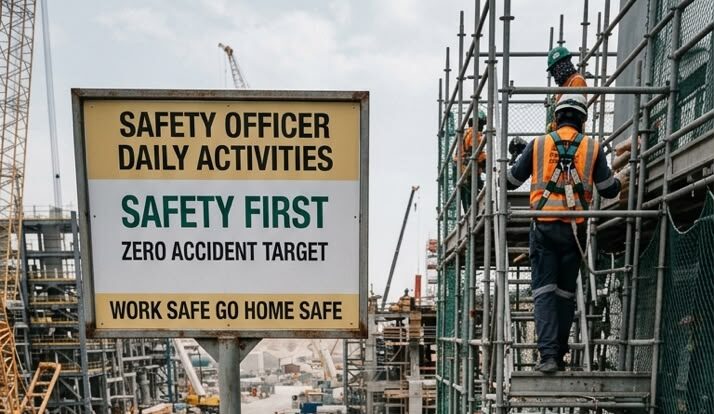
I am a content creator. Safety Officer, is one of the most important topics at any construction site, industrial plant, refinery, power plant, steel plant, warehouse, or production facility. The success of any organization isn’t just measured by production, profits, or timely project completion, but also by the safety of its employees. A safety officer is responsible for ensuring this safety system is effective. Regular activities and responsibilities Safety Officer
A safety officer isn’t just a rule enforcer; they play a crucial role in ensuring employee safety, accident prevention, risk control, and the development of a safe work culture. Their primary objective is to ensure that every employee works in a safe environment and that every task is completed according to established safety standards.
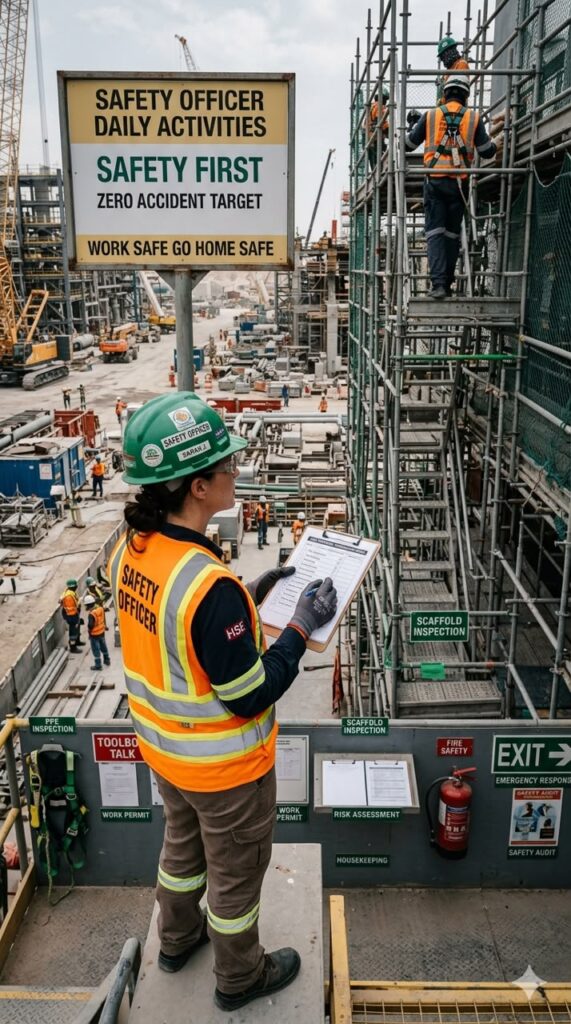
Who is a Safety Officer?
A Safety Officer is a trained professional who ensures compliance with safety regulations at the workplace, identifies potential hazards, assesses risks, and implements necessary measures to prevent accidents.
His main objectives:
- Ensuring employee safety
- Preventing accidents
- Ensuring compliance with company safety policies
- Ensuring compliance with legal safety standards
- Creating a safe working environment
Safety Officer’s Daily Activities
Morning Site Inspection
Every day, before work begins, the Safety Officer inspects the site.
He or she checks:
- Is the work area safe?
- Is the path clear?
- Is there any new hazard?
- Is the machinery in a safe condition?
- Is PPE being used?
This inspection forms the basis of the day’s safety plan.
Conducting a Toolbox Talk
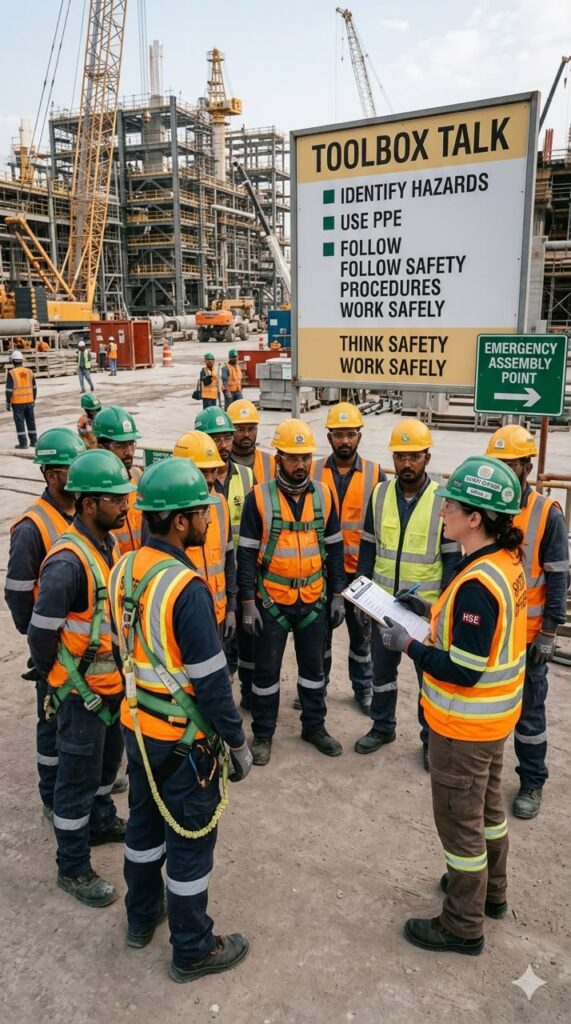
At the beginning of each workday, it is essential to provide safety information to employees.
Topics covered in a Toolbox Talk:
- Work of the day?
- Potential hazards?
- Use of PPE?
- Emergency procedures?
- Special precautions?
This activity raises awareness among employees.
PPE Inspection
The Safety Officer ensures that all employees are wearing the required PPE.
PPE includes:
- Safety Helmet
- Safety Shoes
- Reflective Jacket
- Safety Gloves
- Safety Goggles
- Ear Plugs
- Full Body Harness
If an employee is not wearing PPE, they are immediately instructed.
Work Permit Verification
Permits must be checked before high-risk work begins.
Key Permits:
- Hot Work Permit
- Work at Height Permit
- Confined Space Entry Permit
- Excavation Permit
- Electrical Isolation Permit
- Lifting Permit
Work should not be started without a valid permit.
Work at Height Monitoring
Work at Height is considered the most hazardous.
The Safety Officer checks:
- Harness is in use
- Lifeline is available
- Anchor point is secure
- Scaffolding is secure
- Guard rail is present
Scaffolding Inspection
Regular inspection of scaffolding is important.
Inspection points:
- Standard
- Ledger
- Transom
- Guard Rail
- Toe Board
- Ladder
- Scaffold Tag
- Base Plate
- Bracing
Housekeeping Inspection
Poor housekeeping is a major cause of accidents.
The Safety Officer ensures:
- Pathways are clear
- Trash is removed
- Materials are kept in order
- No slippery surfaces
Hazard Identification
Identifying potential hazards on site is his or her most important responsibility.
Examples:
- Open pits
- Electrical hazards
- Falling materials
- Machinery hazards
- Chemical hazards
Risk Assessment Review
A risk assessment is conducted before every task.
This considers:
- What the hazard is
- What its severity is
- How it will be controlled
Safety Signage Verification
All safety signs should be posted in the correct location.
For example:
- Danger
- Warning
- Mandatory PPE
- No Smoking
- Emergency Exit
Weekly Activities
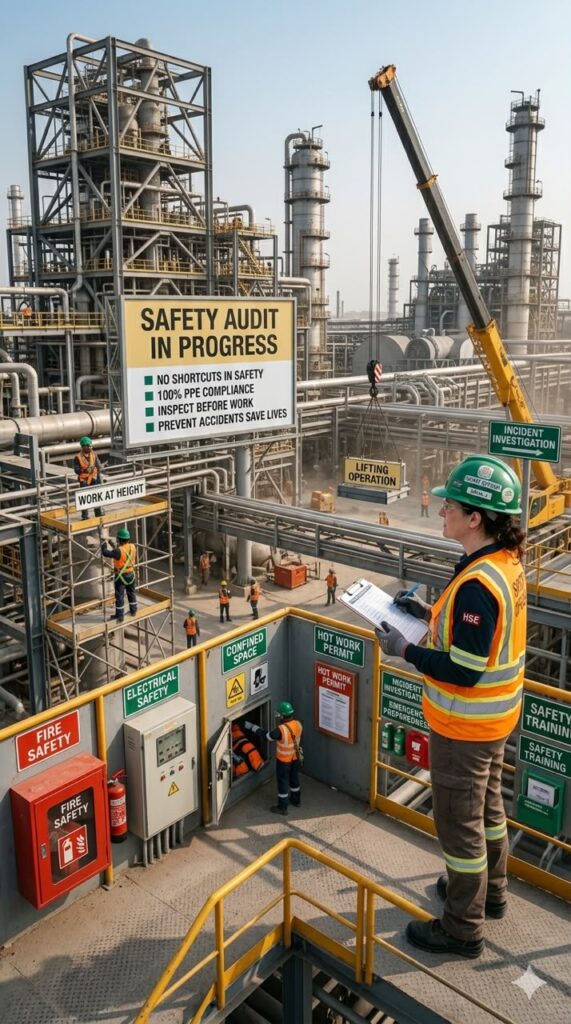
Safety Audit
The weekly safety audit involves a detailed inspection of the entire work area.
Checkpoints:
- PPE Compliance
- Equipment Safety
- Fire Safety
- Electrical Safety
- Documentation
Emergency Equipment Inspection
The Safety Officer inspects:
- Fire Extinguisher
- Fire Alarm
- Emergency Light
- First Aid Box
Safety Training
Employees are trained periodically.
Topics:
- Fire Safety
- Work at Height
- Electrical Safety
- Emergency Response
Monthly Activities
Safety Meeting
A meeting is held with management and employees.
Discussion:
- Accidents
- Near Miss
- Safety Performance
- Corrective Actions
Incident Analysis
If an incident has occurred, it is analyzed.
Investigation:
- Root Cause
- Corrective Action
- Preventive Action
Role in an Emergency Situation
The role of the Safety Officer during an emergency is crucial.
Fire Emergency
- Activating the Alarm
- Conducting Evacuations
- Notifying the Fire Team
Medical Emergency
- Providing First Aid
- Calling an Ambulance
- Assisting an Injured Employee
Chemical Leak
- Evacuating the Area
- Calling the Emergency Response Team
Qualities of a Good Safety Officer
- Leadership Skills
- Communication Skills
- Observation Skills
- Technical Knowledge
- Problem-Solving Ability
- Decision-Making Capability
- Positive Attitude
- Team Management
Important Documents for a Safety Officer: Responsibility
- Risk Assessment
- Method Statement
- Toolbox Talk Record
- Permit Records
- Inspection Checklist
- Training Records
- Incident Reports
- Audit Reports
- PPE Register
- Emergency Drill Records
Conclusion
A Safety Officer is the backbone of any organization’s safety system. Their regular activities are not limited to inspections; they also play a vital role in employee safety, accident prevention, training, risk management, emergency preparedness, and developing a safety culture. A competent and informed Safety Officer not only reduces accidents but also increases employee confidence and contributes to the organization’s productivity.