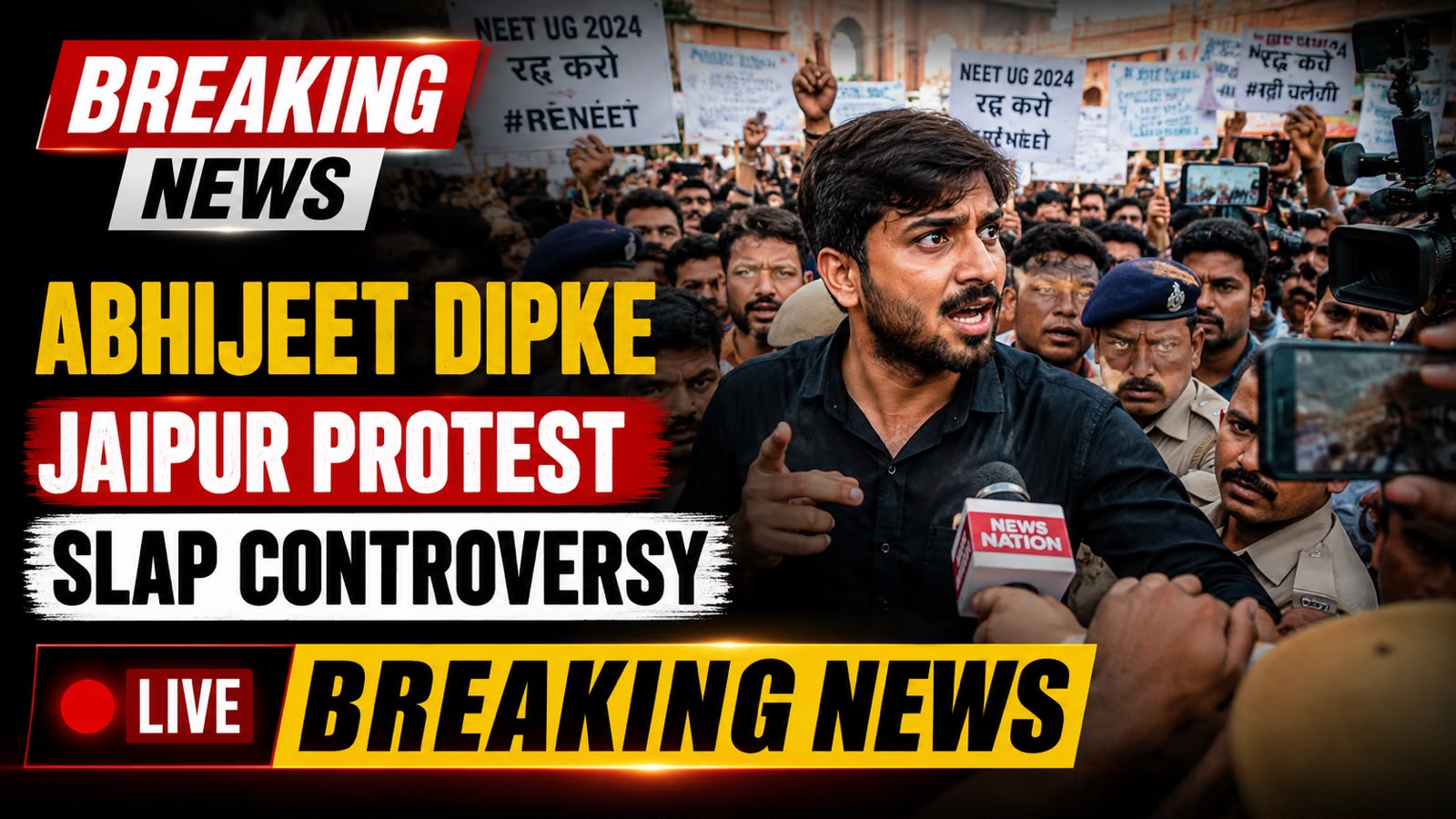
Abhijeet Dipke, Founder of Cockroach Janata Party attacked in Jaipur, Whenever a major movement or protest takes place in the country, the events surrounding it often draw public attention. Recently, during a protest in Jaipur, the assault and slapping of CJP (Cockroach Janta Party) founder Abhijeet Dipke garnered widespread attention, both on social media and on news channels. After the video of the incident surfaced, various reactions were seen. Some called it an attack on democracy, while others attributed it to a political controversy.
Although the investigation into the matter is still ongoing, and many facts remain to be confirmed, this incident has once again raised the question of the place of violence in any democratic protest and how dissent should be expressed.
Who is Abhijeet Dipke?
Abhijeet Dipke is known as a young social and political activist. He created a platform to raise voices against youth issues, including alleged irregularities in the education system, employment, and various competitive examinations.
He has reached out to a large number of young people through social media. His videos and speeches often focus on issues related to education, unemployment, and government systems. This is why he has garnered support from youth in many parts of the country.
What is CJP?
CJP, or Cockroach Janta Party, is a platform launched to raise social and political issues. Initially, it was seen by many as a satirical campaign, but over time, it evolved into an active group discussing youth issues.
The platform’s primary focus has been on issues related to the education system, transparency in competitive examinations, employment opportunities, and youth rights. Its active presence on social media has generated considerable attention.
Purpose of the Jaipur Protest
Abhijeet Dipke, The primary objective of the protest held in Jaipur was to raise various youth-related issues. A large number of youth participated in the protest. The organizers stated that they wanted to convey their views to the government on issues related to the education system and employment.
In such protests, people generally try to present their demands peacefully. But sometimes, large crowds or confrontations between people with different ideologies can lead to tensions.
What happened in Jaipur?
On June 15, 2026, a CJP demonstration was organized at the Martyrs’ Memorial in Jaipur, the capital of Rajasthan. The primary purpose of the demonstration was to protest the NEET paper leak, the education system, and unemployment.
According to eyewitnesses and videos that surfaced, as Abhijeet Deepak was walking toward the venue, a large crowd of his supporters accompanied him. Some supporters carried him on their shoulders.
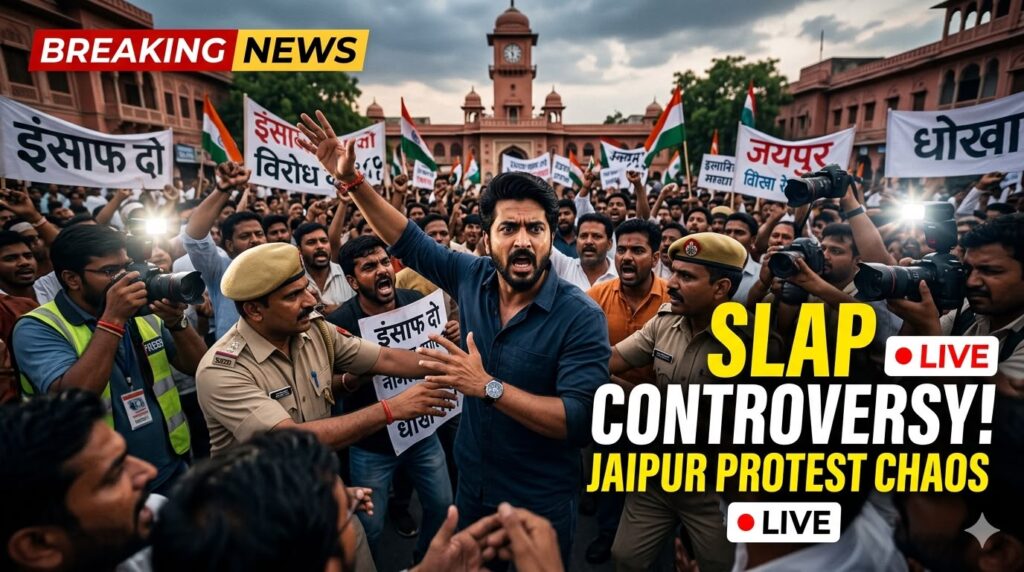
Suddenly, some people approached him and a scuffle allegedly broke out. Within moments, the situation escalated to the point where Abhijeet Deepak was slapped.
Videos of the incident quickly went viral on social media. The videos showed a chaotic situation, with people trying to restrain each other.
Abhijeet Dipke’s Reaction
Despite the attack, Abhijeet Deepak stated that he was not afraid and would continue his movement. He appealed to his supporters to continue peaceful protests and raise educational issues.
The Importance of Protest in a Democracy
The most important feature of democracy is that every citizen has the right to express their views. If an individual or organization disagrees with a policy or system, they can register their protest peacefully.
The Indian Constitution guarantees citizens the right to freedom of expression and peaceful assembly. This is why protests and demonstrations on various issues occur from time to time in the country.
But when violence or violence are involved in a protest, the core issue is lost and the focus shifts to the controversy.
Why should violence not occur?
Clashes of opinions are normal in any democratic society. Different people may have different opinions. But disagreement should not lead to violence.
If someone disagrees with the views of a leader, activist, or organization, they have many peaceful ways to express their views.
Violence not only violates the law but also sends a negative message to society. Furthermore, it diminishes discussion of real issues and shifts the focus to the controversy.
Questions Raised About Security Arrangements
This incident also sparked discussions about security arrangements.
Experts believe that crowd management and security plans should be prepared in advance for any major public event. Adequate security personnel are essential at the venue.
If there is a possibility of controversy or protest at an event, extra caution is necessary. This can significantly prevent such incidents.
The Role of Youth
An important aspect of this entire matter is that the program focused primarily on youth issues.
Today’s youth are more aware than ever before about issues related to education, employment, and the future. They can easily convey their views through social media.
But it is also important for young people to respect law and order during any movement or campaign.
Political Environment and Controversy
Following the incident, various parties made different claims. Some called it a political conspiracy, while others offered different reasons.
However, the veracity of any claim will only be clear after the investigation is completed. Therefore, it is not appropriate to draw conclusions based solely on viral videos or social media posts.
Only after the reports from investigating agencies and the police will a better understanding of the actual circumstances of the incident emerge.
Lessons for the Future
This incident in Jaipur leaves several important lessons.
First, the purpose of any movement should be to raise issues, not to create controversy.
Second, dissent is natural in a democracy, but it should be expressed peacefully.
Third, security arrangements should be robust at large public events to prevent any untoward incident.
Fourth, every piece of information that goes viral on social media should not be accepted without verification.
Conclusion
The slapping and assault of Abhijeet Deepak in Jaipur attracted national attention. This incident is not limited to an attack on an individual; it also touches upon larger issues such as democratic dialogue, protest, and public safety.
In a democracy, every person has the right to express their views and protest. But this right is meaningful only when exercised peacefully and responsibly.
Instead of turning disagreement into violence, solutions need to be found through dialogue, debate, and discussion. This is the greatest strength of any democratic society.