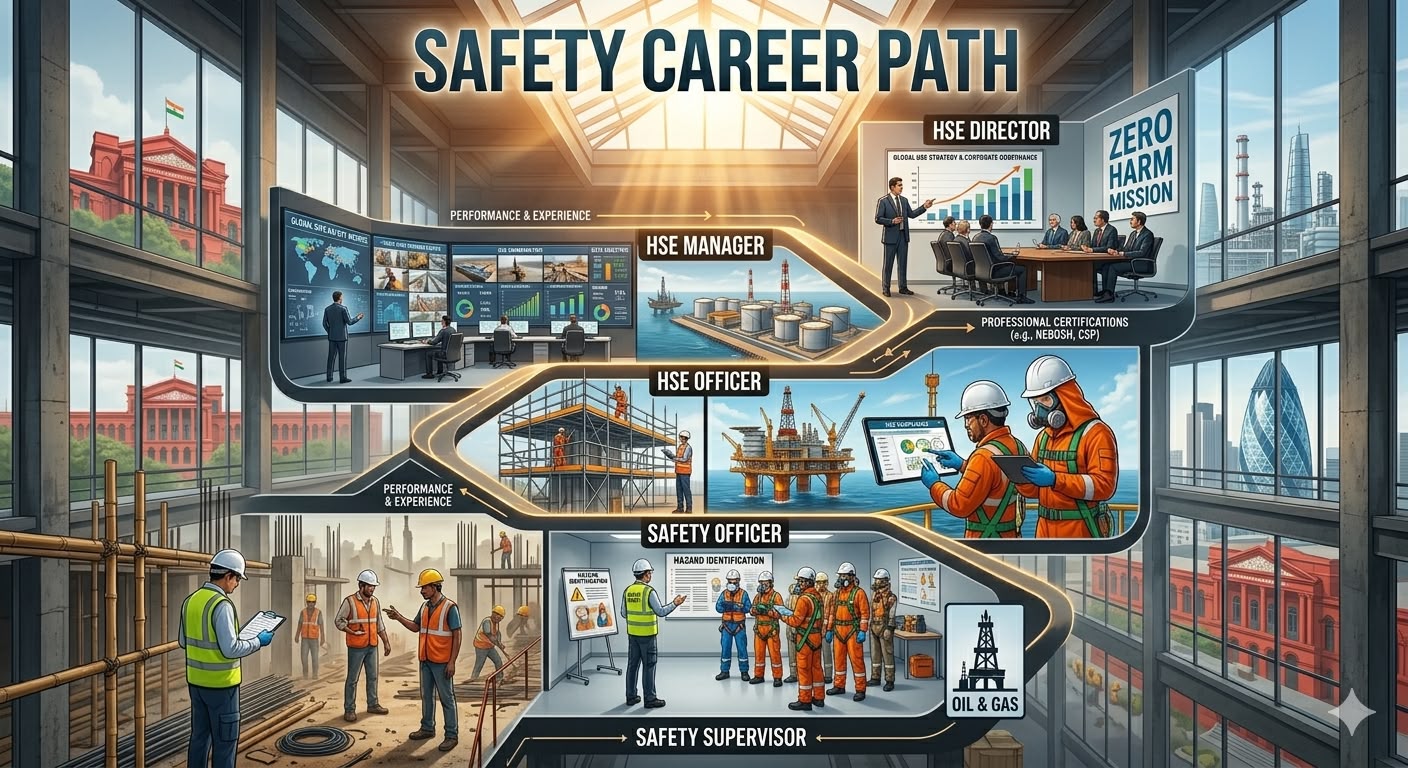
Job Difference of Safety Officer in India and Foreign , If you want to pursue a career in Construction Safety, Industrial Safety, or HSE (Health, Safety & Environment), there’s a significant difference between jobs in India and foreign countries. Not only salary, but also training, responsibility, authority, safety culture, and career growth are different.
- Difference in Safety Culture
India
The level of safety in India depends on the company and project.
- A worker is working wearing a helmet without a chin strap.
- A safety harness is required when working at heights, but the harness is not fastened.
- The safety officer issues a warning and ensures work continues.
Foreign Countries
In foreign countries, safety comes first.
- If a worker doesn’t wear a chin strap, work will be stopped immediately.
- If the harness is found to be incorrectly fitted while working at height, the worker may be removed from the site.
- Even supervisors and managers cannot break safety rules.
. Safety Officer’s Authority
India
On many projects, the Safety Officer merely provides observation.
Example:
- A worker is welding without gloves.
- The Safety Officer speaks to the supervisor.
- The supervisor may also ignore.
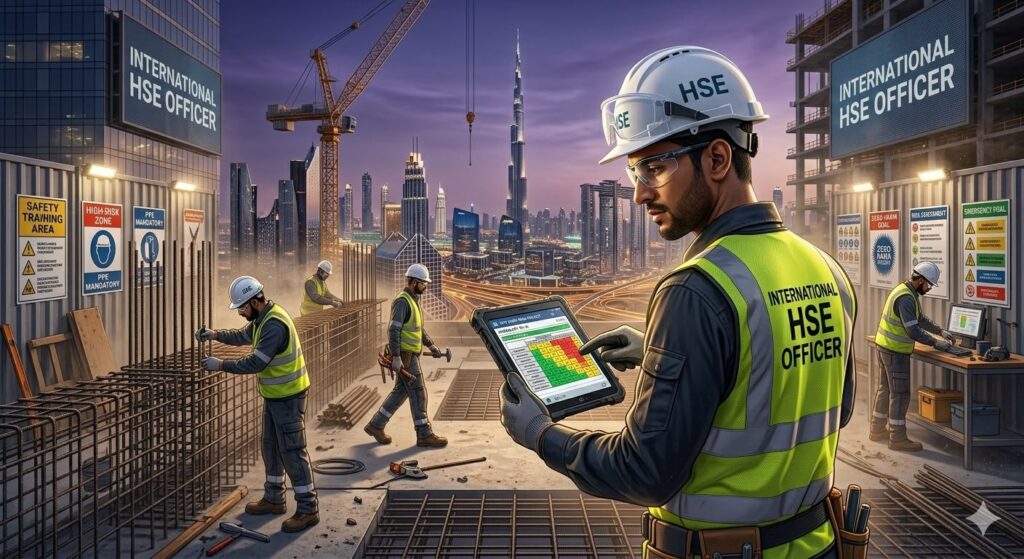
Foreign
The Safety Officer has Stop Work authority.
Example:
- An unsafe condition is observed during crane lifting.
- The Safety Officer can immediately stop the lifting.
- The Project Manager does not challenge his or her decision.
Difference of Daily Work
India
Daily work of Safety Officer:
- Site inspection
- PPE checking
- Toolbox Talk
- Safety observation
*Safety report - Work permit checking
Example
Morning:
- PPE checking of workers
Afternoon:
- Height work inspection
Send feedback
foreign
Daily Kaam:
- Risk Assessment review
- Method Statement review
- Permit To Work approval
- Emergency drill
- Incident investigation
*Safety audit - Client meeting
Example
Morning:
- Verifying Risk Assessment
Before work:
- Toolbox Talk
During work:
*Inspection
Shaam:
- Digital safety report upload
Documentation difference
India
Aam documents:
- Toolbox Talk
- Observation Report
- Permit
- Inspection Checklist
foreign
Additional documents:
- Risk Assessment (RA)
- Method Statement (MS)
- Job Safety Analysis (JSA)
- Emergency Response Plan
- Incident Investigation Report
- Lifting Plan
*Rescue Plan
Training difference
India
Often training:
- Induction Training
- PPE Training
- Fire Fighting
- Work at Height
foreign
Very advanced training has been done:
Work at Height Training
It is said:
- Harness inspection
- Anchor point selection
*Fall factor - Rescue procedure
Confined Space Training
It is said:
*Gas testing
*Ventilation
- Rescue system
Lifting Safety Training
It is said:
*Crane safety
- Load calculation
- Rigging inspection
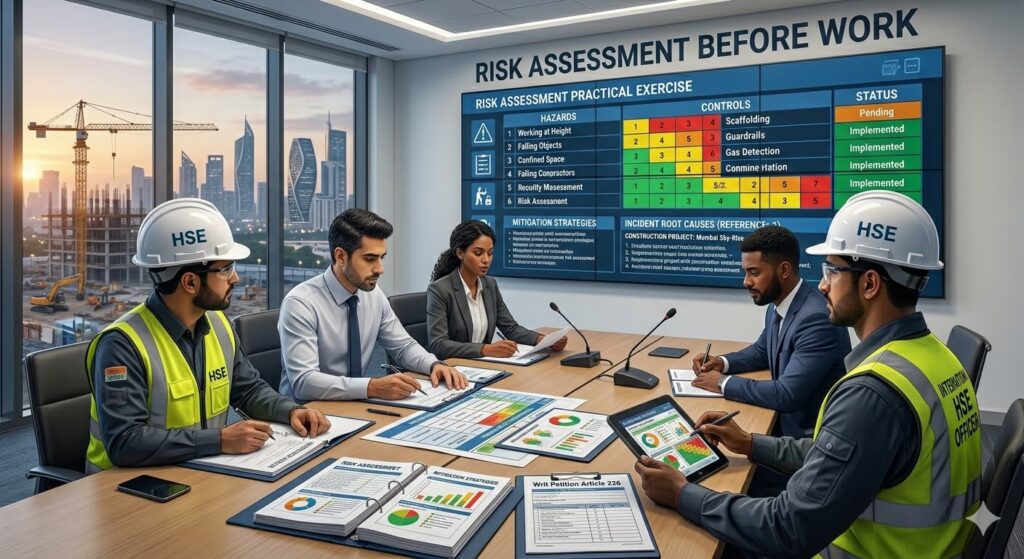
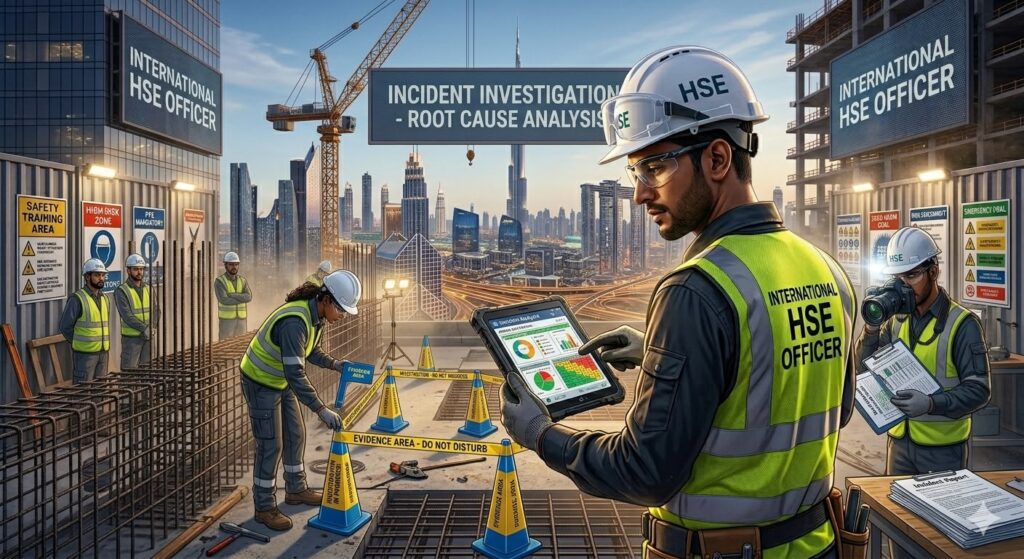
Incident Investigation Training
It is said:
- Root Cause Analysis
- 5 Why Method
*Fishbone Analysis
Send feedback
- What are the courses?
Basic Level
IOSH Managing Safely
For:
- Supervisor
- Junior Safety Officer
Duration:
- 3–5 Days
Value:
- Basic International Certificate
Intermediate Level
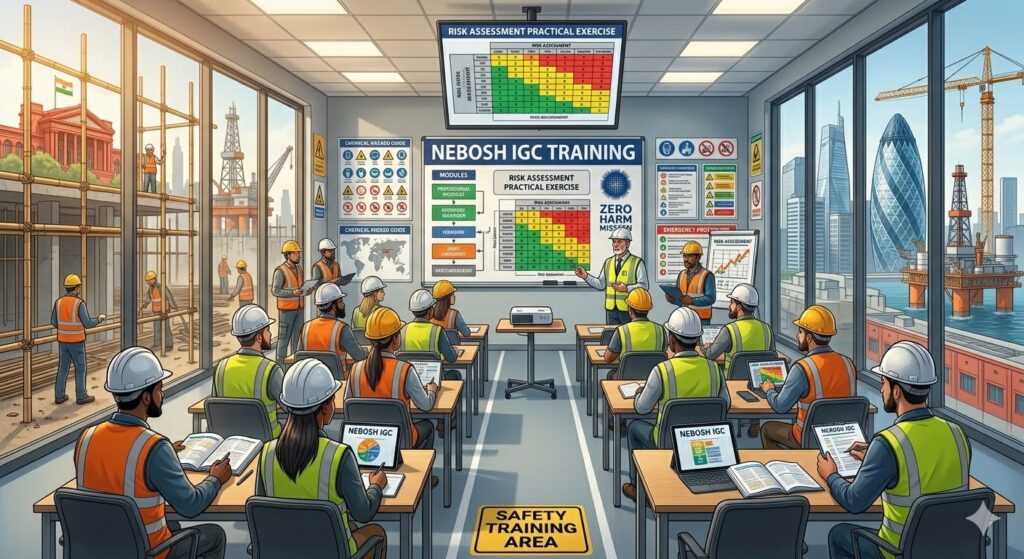
NEBOSH IGC
Most famous safety course.
For:
- Safety Officer
- HSE Officer
Taught:
- Risk Assessment
- Fire Safety
- Work at Height
- Excavation Safety
- Electrical Safety
- Incident Investigation
Duration:
- 1–3 Months
Chances of getting Gulf jobs increase after this course.
Advanced Level
NVQ Level 6 Diploma
For Whom:
- Senior Safety Officer
- Safety Manager
This is a UK qualification.
Many people apply for Graduate Membership after this.
OSHA Courses
OSHA 30 Hour
Popular Countries:
- USA
- Middle East
Topics:
- Fall Protection
- Electrical Safety
- PPE
- Excavation Safety
Send feedback
. Salary Comparison
India
Fresher:
₹20,000 – ₹35,000
2–5 Years:
₹35,000 – ₹70,000
5+ Years:
₹70,000 – ₹1.5 Lakh+
Gulf Countries
Safety Officer:
₹80,000 – ₹2 Lakh+
HSE Officer:
₹1.5 Lakh – ₹3 Lakh+
HSE Manager:
₹3 Lakh – ₹7 Lakh+
Send feedback
Real Example
India Site
Worker:
“I’ll put on the harness later.”
Supervisor:
“Work quickly.”
Safety Officer:
“Please put on the harness.”
Foreign Site
Worker:
“I haven’t put on the harness.”
Safety Officer:
“Stop work.”
Supervisor:
“Work will only start when safety is compliant.”
This is the biggest difference.
If you want to go abroad
Step-by-Step Roadmap:
- Complete a Safety Diploma.
- Gain 2–3 years of construction experience.
- Do NEBOSH (IGC).
- Improve your English speaking and report writing.
- Learn to create risk assessments and method statements.
- Learn Incident Investigation.
- Prepare for Interviews.
- Apply for Gulf Jobs.
In the construction safety field today, a NEBOSH IGC degree plus 3 years of practical site experience is considered the strongest combination for overseas employment. This significantly increases the opportunities for a Safety Officer or HSE Officer in countries like the UAE, Saudi Arabia, Qatar, and Oman.
Send feedback