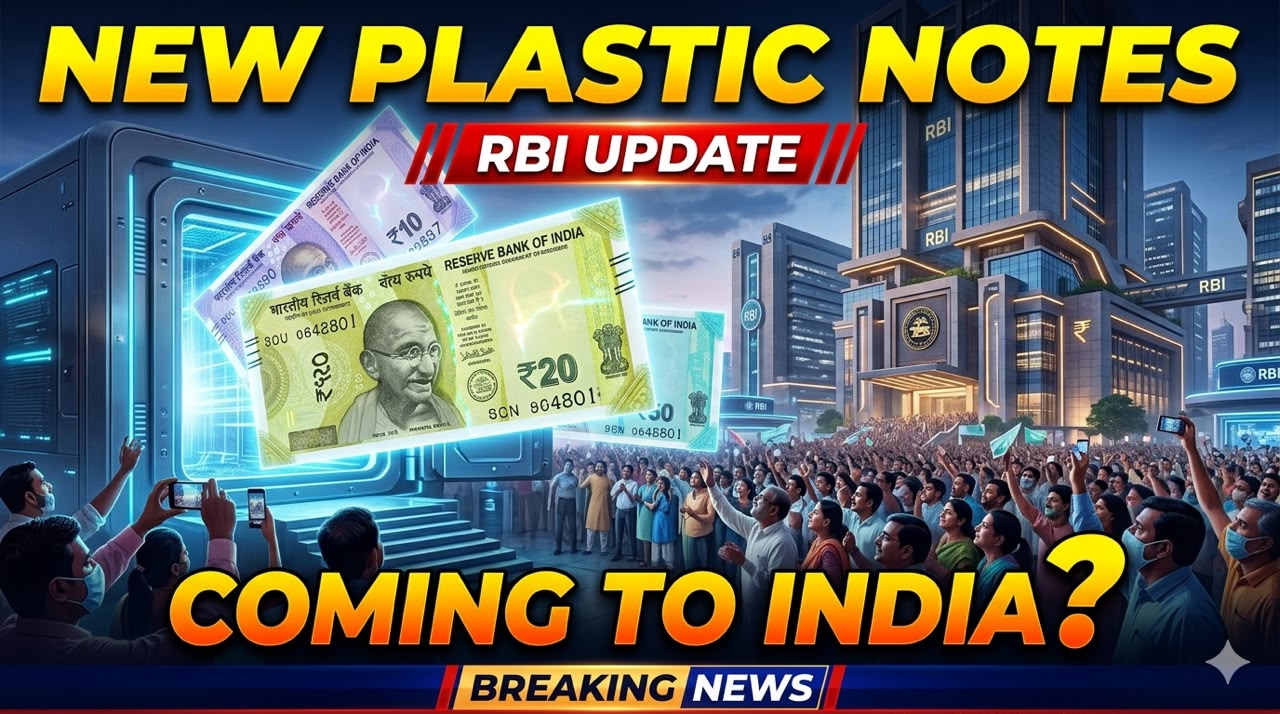
Preparation of plastic notes in India:, A major debate has once again erupted in India regarding the currency system. In recent months, news has emerged that the Reserve Bank of India (RBI) is working on a plan to introduce plastic-based notes, or polymer notes, in the future. Although an official launch date for these notes has not yet been announced, the topic has captured the attention of the public, economists, and banking experts.
The world is changing rapidly. Despite the increasing use of digital payments, cash transactions remain a significant part of India’s economy. Millions of people use cash notes daily. Consequently, the government and RBI desire a currency system that is more secure, durable, and modern.
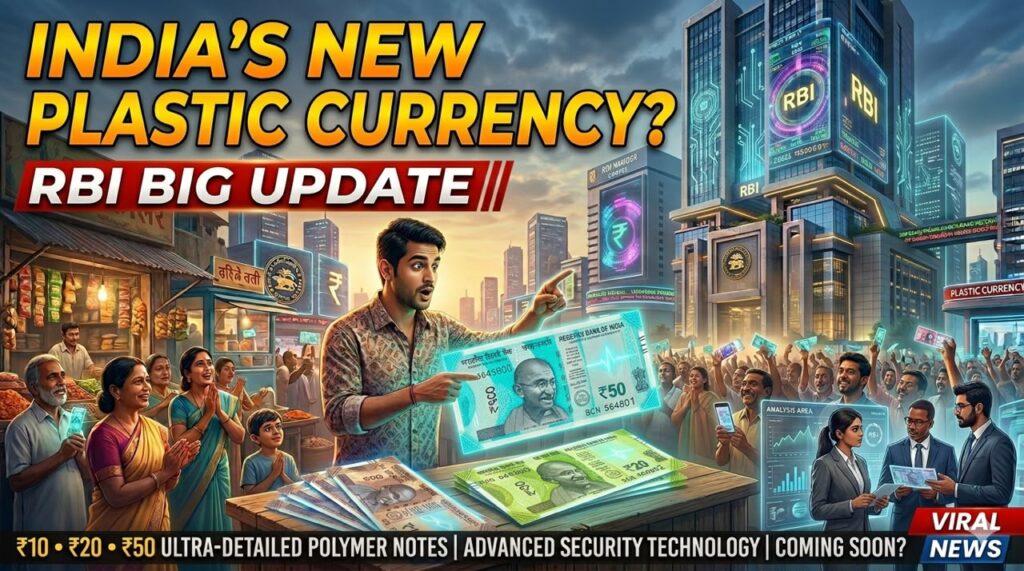
What are plastic notes?
Plastic notes are not made from ordinary plastic. They are made from a special type of polymer material. This technology is already being used in many countries around the world.
The most important feature of these notes is that they are stronger than paper notes. They are less affected by water, moisture, dust, and general wear and tear. Furthermore, they can be equipped with many advanced security features, making counterfeiting significantly more difficult.
Why did this idea come to India?
In a vast country like India, a large number of notes have to be printed every year. Small denomination notes are particularly susceptible to wear and tear. Often, notes become torn, dirty, or unusable.
The RBI has long faced the challenge of improving the quality of notes and ensuring their long-term usability.
For this reason, polymer notes are being considered as a potential solution.
Which organizations are behind this plan?
The Reserve Bank of India plays the most important role. The RBI is the country’s currency issuing body and makes decisions regarding the design, security, and distribution of notes.
In addition:
- The Ministry of Finance of the Government of India
- Government agencies involved in security printing
- The Department of Currency Management
- Committees of technical experts
could also be involved in such a scheme.
It is important to clarify that no single person has yet been identified as the main face of this scheme. This is an institutional process in which multiple departments jointly make decisions.
Has the Prime Minister made any announcements regarding the new currency?
So far, the Prime Minister has not officially announced the national launch of plastic notes.
However, there has been a continued emphasis on strengthening the country’s modern banking system, digital economy, and secure financial system. Discussions on modernizing the currency system are also considered important within this broader vision.
Key Benefits of Plastic Notes
- More Durable
Paper notes wear out quickly, while polymer notes can remain in good condition for many years.
- Prevent Counterfeit Notes
Special security windows, transparent parts, and advanced technological features can be added to them.
- Water Protection
They are less likely to deteriorate even when exposed to rain, moisture, or water.
- Hygiene
Their surface remains relatively clean and is easy to clean.
- Reduction in Government Expenditure
Longer lifespans may reduce the need for frequent printing of notes.
Which countries in the world already use plastic notes?
Many countries have adopted polymer notes.
These include:
- Australia
- Canada
- New Zealand
- United Kingdom
- Singapore
- Romania
- Vietnam
Countries like these.
The experiences of these countries show that polymer notes have been successful as long-lasting currency.
Which notes could be introduced first in India?
Experts believe that small denomination notes could be introduced.
Potential denominations:
- ₹10
- ₹20
- ₹50
However, the final decision will be taken by the RBI and the government.
Will old notes be discontinued?
This is the biggest question on people’s minds.
If plastic notes are introduced in the future, it won’t mean that existing notes will be discontinued suddenly.
Usually, when new currency is introduced, both old and new currencies coexist for a period of time. Old notes are gradually withdrawn through the banking system.
Therefore, ordinary citizens need not panic.
Will ATM machines need to be modified?
It’s possible that some technical changes will be required.
Because polymer notes differ in thickness, flexibility, and texture from paper notes, the banking system and ATM network may need to be adapted to the new currency.
However, many countries around the world have successfully made this transition.
Will counterfeit notes be completely eliminated?
Complete elimination is difficult because counterfeiters are constantly inventing new techniques.
However, experts believe that polymer notes will make counterfeiting much more difficult than before.
This can strengthen the country’s financial security.
Why new notes in the era of digital payments?
Many people ask, why is there a need for new notes when we are in the era of UPI and digital payments?
The answer is simple.
Even today, millions of people in India use cash transactions. Cash still plays an important role in rural areas, small businesses, and many local markets.
Therefore, both digital payments and cash currency will coexist.
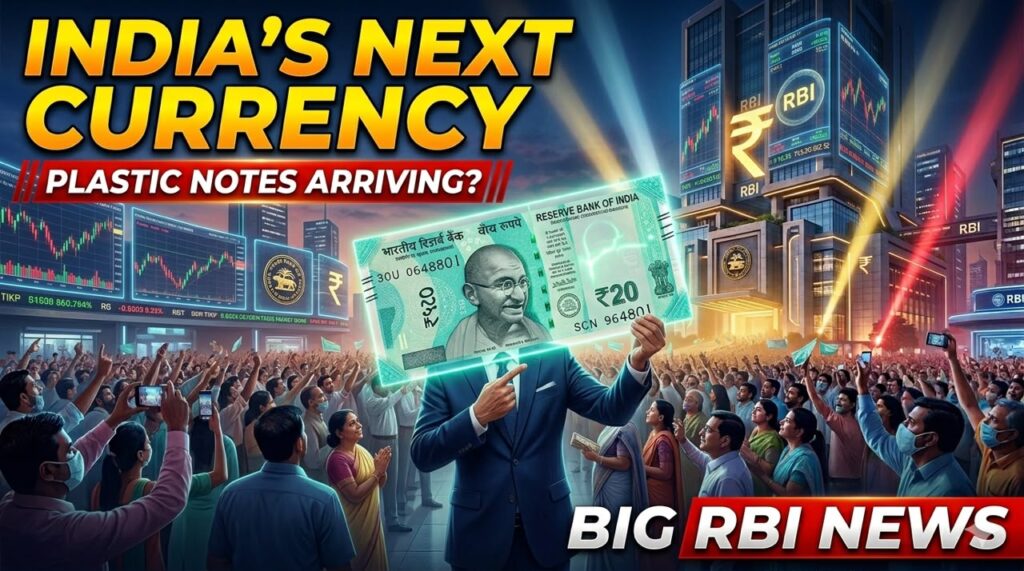
What could the Indian currency look like in the future?
Indian currency could become more modern and secure in the coming years.
Possible changes:
- Advanced security features
- Improved durability
- Modern design
- Control of counterfeit notes
- Use of smart tracking technologies
However, final decisions on all these aspects will be made over time.
What will be the impact on the general public?
The biggest benefit for ordinary citizens will be that notes will not deteriorate quickly.
Merchants will receive better quality notes.
The pressure on banks to exchange damaged notes may be reduced.
This could help the government reduce its long-term currency management expenditure.
When could it be launched?
No specific date has been announced at this time.
If trials are successful and all technical preparations are complete, polymer notes could be introduced on a limited scale in the coming years.
However, no date should be considered final until an official announcement is made.
Conclusion
India’s currency system is constantly evolving over time. The idea of plastic or polymer notes is being considered part of this change. The purpose of these notes is not only to introduce a new design, but also to enhance security, prevent counterfeiting, extend the life of notes, and make currency management more effective.
This process is currently in its initial stages, and a final decision will be made in the future. However, if this plan is implemented, it could prove to be a significant change in the Indian currency system. It will be interesting to see whether India joins the list of countries that have successfully adopted polymer-based currency.