
Stock Markets Under Pressure, A large part of the global economy is tied to the stock market. When the stock market grows rapidly, investors are happy, companies receive new funds, and economic growth is boosted. However, when the market comes under pressure, it impacts not only investors but also the general public, businesses, and the entire economy.
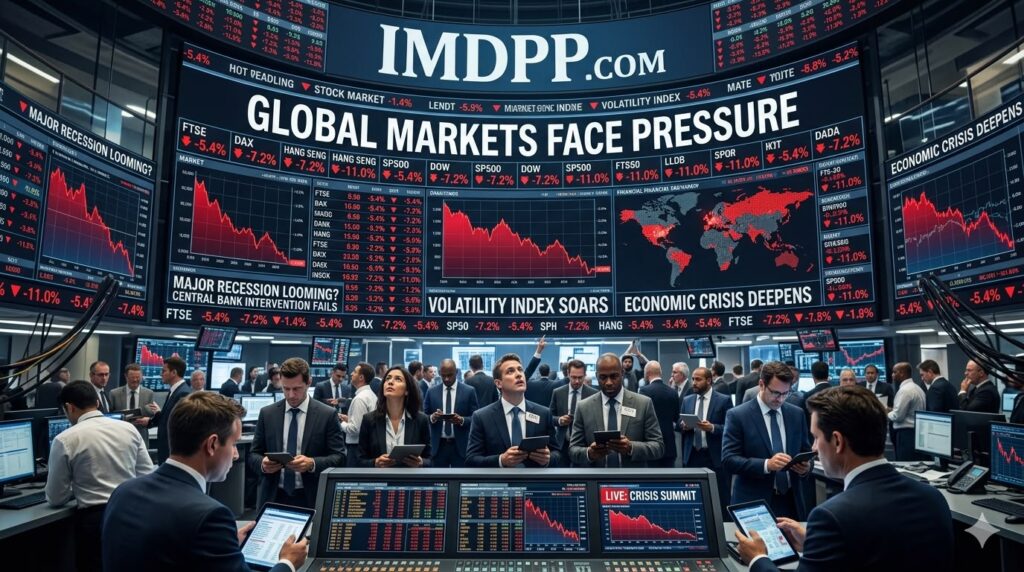
Global stock markets have once again become a topic of discussion in June 2026. Several major markets, from the US to Europe and Asia, are under pressure. Investors are cautious, and the market continues to fluctuate. The question is, what happened to put the global stock markets under pressure? In this article, we’ll explain the entire story in simple terms, from the beginning to the current situation.
What is stock market?
Stock Markets Under Pressure, The stock market is a platform where companies sell their shares and investors buy them. When a company’s business is doing well, demand for its shares increases, driving up share prices. Similarly, when concerns about the company or the economy grow, share prices can fall.
Some of the major stock exchanges in the world are:
- New York Stock Exchange (USA)
- Nasdaq (USA)
- London Stock Exchange (UK)
- Tokyo Stock Exchange (Japan)
- National Stock Exchange – NSE (India)
- Bombay Stock Exchange – BSE (India)
Movements in these markets impact the entire world.
What happened in the last few years?
After COVID-19, governments and central banks around the world injected significant amounts of money into the market to stabilize the economy. This led to a tremendous surge in stock markets. Shares of technology companies, the AI sector, and digital business firms saw record increases.
Between 2023 and 2025, Artificial Intelligence (AI) energized the market. Investors invested heavily in AI companies. The valuations of some companies reached record levels.
But during this time, inflation also began to rise. To address this, central banks began raising interest rates. This was the point where market pressure began to increase.

What is the relationship between interest rates and the market?
Interest rates play a crucial role in any economy. When the central bank increases interest rates:
- Loans become more expensive
- Corporate expenses increase
- New investments decrease
- People reduce spending
This directly impacts company profits and makes investors cautious. This could lead to a decline in the stock market.
What signal did America’s economy give?
America’s jobs report in June 2026 shocked the market. Analysts expected job growth to slow, but the number of jobs turned out to be higher than anticipated.
At first glance, this seemed like good news. But the market saw it differently. Investors began to believe that if the economy was so strong, the US central bank might delay interest rate cuts.
This concern increased pressure on the stock market.
Impact on the Technology Sector
Technology and AI companies have been the market’s star performers over the past few years. But when interest rates remain high, growth companies are most affected.
Investors began booking profits in technology stocks. Many major tech stocks saw declines. This also impacted the Nasdaq and other global technology indices.
Long-term prospects for the AI sector are still considered strong, but investors are exercising caution in the short term.

Oil Prices and Geopolitical Tension
Oil prices are another major factor putting pressure on global stock markets.
Tensions in the Middle East and several other geopolitical issues have caused oil prices to fluctuate. When crude oil becomes more expensive, it:
- Transport costs increase
- Manufacturing becomes more expensive
- Inflation increases
All of these factors impact companies’ profit margins and weaken market sentiment.
What’s happening in Europe?
The European economy is still facing many challenges.
- Growth is slowing
- Energy costs remain high
- Inflation is not fully controlled
- The manufacturing sector is under pressure
All these factors are making investors cautious in European stock markets.
India’s Share Market
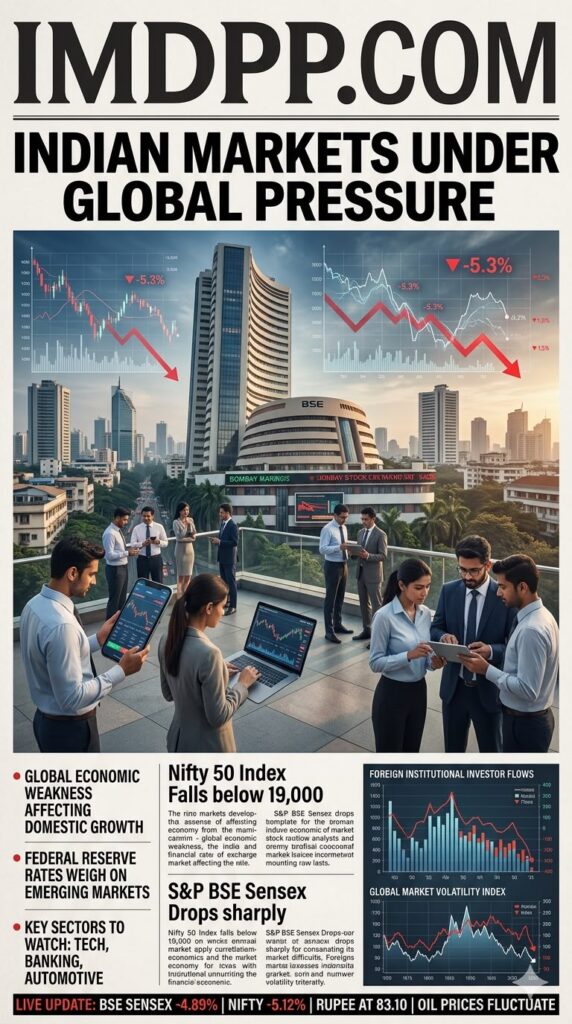
India is one of the world’s fastest-growing economies. Despite this, global developments also impact the Indian market.
RBI policy, inflation data, global market trends, and the activity of foreign investors influence the Indian market.
Recently, the RBI did not make any changes to interest rates, but provided some cautious signals regarding growth and inflation. Following this, the market experienced a mixed reaction.
IT, metals, and export-oriented sectors showed some weakness, while some domestic sectors showed stability.
Role of Foreign Investors
Foreign Institutional Investors (FIIs) play a vital role in global market movements.
When FIIs invest money in a country, the market receives support. When they withdraw money, market pressure can increase.
During global uncertainty, FIIs often move toward safe-haven assets. This can increase volatility in emerging markets.
What is your biggest concern right now?
Currently, investors are keeping an eye on three key issues:
- When will interest rates be reduced?
- How quickly will inflation be controlled?
- In which direction will global tensions and oil prices move?
The answers to these questions could determine the market’s future direction.
Could the market crash?
Currently, most experts consider this a normal correction and a period of uncertainty. Many key economic indicators are still strong.
However, market volatility may persist. Investors should focus on fundamentals rather than making decisions based on rumors.

What are the lessons for investors?
- Don’t panic sell stocks
- Think long-term
- Diversify your portfolio
- Focus on quality companies
- Don’t be influenced by daily market fluctuations
Stock market fluctuations are common. Strong companies often deliver superior returns over the long term.
Conclusion
Global stock markets are under pressure in June 2026. The main reasons for this are a strong US jobs report, uncertainty regarding interest rates, oil prices, geopolitical tensions, and profit-booking in the technology sector.
Investors are currently cautious, and the market is reacting sharply to new economic data. While volatility may persist in the short term, the world’s major economies and companies remain on solid footing.
Inflation data, central bank decisions, and global developments will determine market direction in the coming weeks. The most important thing for investors will be patient and well-thought-out decisions.